
A phrase that entered the American vocabulary during the COVID pandemic was the supply chain. It is hard to read online much about food in the country without running across the supply chain. It is responsible for
-
- food waste,
- global warming,
- shortages of goods in stores,
- high prices at the supermarket, and
- overall consumer dissatisfaction and dismay,
or so we read, but there may be more to it than that.
I learned about supply chains when they were merely a part of the jargon among farmers, packinghouse operators, transporters, and store managers. My research at the University of Georgia involved tracking fresh produce from farm to store. It turns out that the supply chain is more complex than what most of us realize and that many of us are dependent on these chains for our groceries, home deliveries, and other possessions we accumulate at home. When I thought I was merely tracking produce, I was gaining an understanding of supply chains, how they work or don’t work sometimes, and what we can do to improve the quality of fresh fruits and vegetables in the supermarket. A well run supply chain is called a value chain.
Speaking of supermarkets, they have pluses and minuses. They evolved from more primitive food stores into what most of us take for granted. How did supermarkets get their start? How have they changed over the years? Why have they become dominant in selling us the food we eat? To get a better understanding of these issues and the history of supply chains I turn to two wonderful books on food history. The story goes back to before the American Civil War and transports us into the middle of the 20th Century. The setting for this journey is Chicago. Today I start with the supply chain. In the next post I will visit the beginnings of supermarkets.
SUPPLY CHAINS
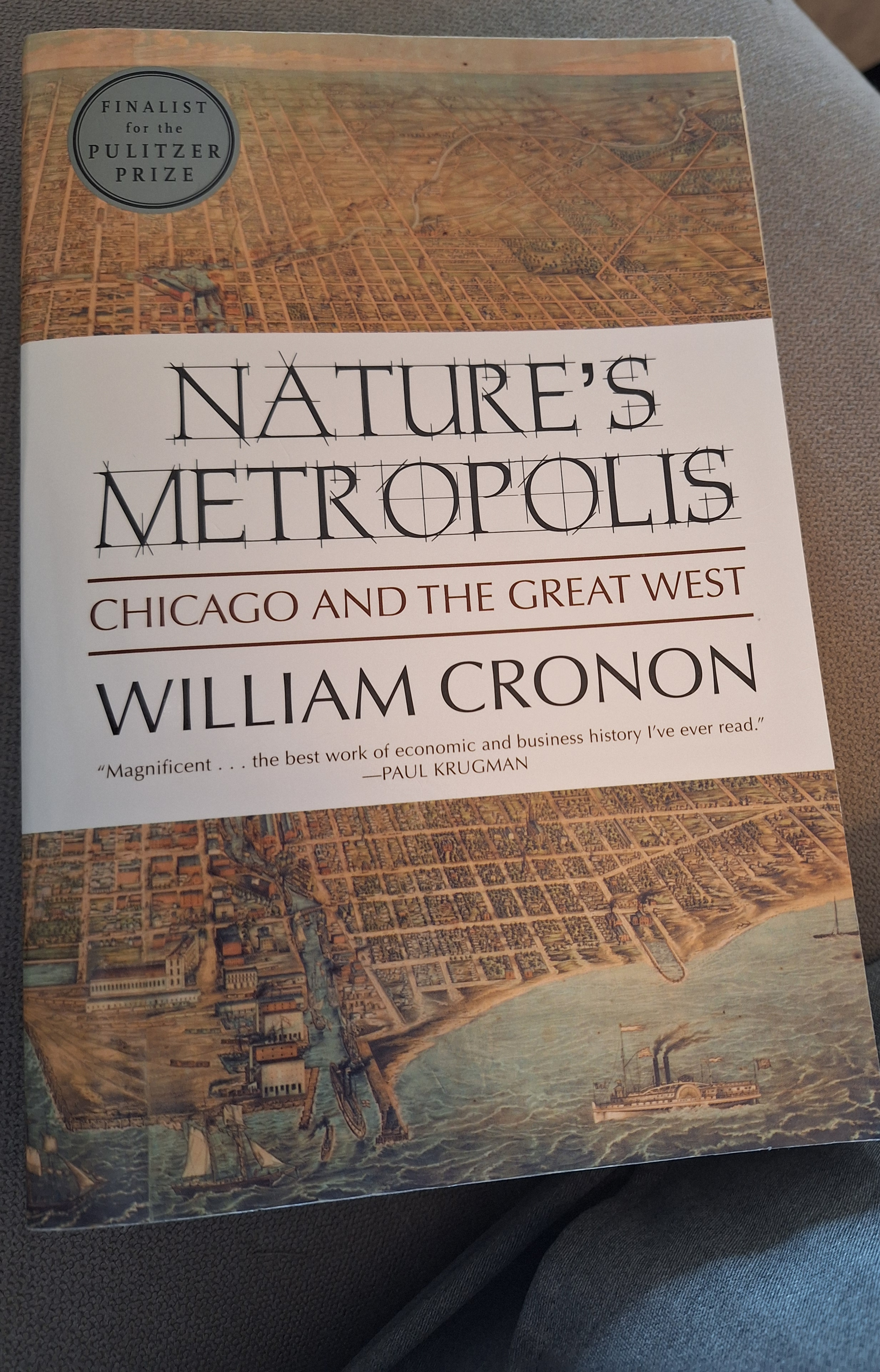 William Cronon introduces us to what he calls 1st and 2nd Nature in Nature’s Metropolis: Chicago and the Great West. Land in the country before the settlers came was 1st Nature. Land converted to farms is 2nd Nature. Farmland is not unspoiled but it is much closer to real nature than what we find in cities.
Although city life and country life are antagonistic to each other, they are interdependent. Without foods produced on the farm, city residents can’t eat. Without customers in the city, farmers can’t move above a subsistence lifestyle. Primitive supply chains brought raw materials to the city. Factories in the cities converted these raw materials into useable products. Bankers provided loans to get the farmers and businesses in the cities started, and the banks allowed for the transfer of money back to the farm. Middlemen developed the means to distribute grain and meat to wholesale and neighborhood markets for sale to residents of the city.
Getting grain, lumber and meat to the city required a mode of transportation. The first chains were by water. It was easiest for lumber by floating logs in the river and then to Lake Michigan. For grain and meat, transport was more difficult. Roads were impassible for much of the year, automobiles and trucks were not yet developed, so railroads became the main mode of transport for grain and meat. Farmers needed to get their grain and live animals to the nearest station on the tracks. Trains became the critical link between the country and the city. For the story about paved roads and trucking transport see Shane Hamilton’s Trucking Country.
Grain was as important to city life since bread was the basic staple of the American diet. Once in the city grains were stored in huge elevators. Wheat was categorized into white winter wheat, red winter wheat, and spring wheat. Grading as well as pricing within a category was on the basis of the absence foreign substances in the shipment and weight per bushel.
Buffalo was a 1st nature source for meat, but the horrible slaughter of this noble beast decimated the supply in a hurry. Live meat animals in cattle cars were transported to the Chicago stockyards. The stench of the stockyards provided the downtown with its characteristic odor. It was the entrepreneurs, Gustavus Swift and Philip Armour, who modernized the meat market. They streamlined the process and shipped dressed beef and pork to other locales in refrigerated railcars, cooled in early years by ice and later by mechanical refrigeration. Local butchery slaughtered animals on site cut meat to order from the carcass.
Upton Sinclair uncovered the depravity of the slaughter and packing of fresh meat in his book The Jungle. In the long run, however, the Armour and Swift companies prevailed. Meat packed in Chicago and transported east was less expensive and available in prepackaged cuts which were preferable to most consumers. Rail expenses increased by shipping live animals to local markets as 45% of the carcass resulted in waste after slaughter and the need to dispose of that waste. These and other meat companies were able to reduce pollution and sell byproducts they began the idea of upcycling. By providing the consumer with attractive packaging and lower prices Swift and Armour became the forerunners of Big Food.
Gateway cities and bankruptcies. Chicago’s State Street was dependent on grain elevators, stockyards, and lumberyards, but the interdependence of city and countryside began to disappear. The commodity economies of the farms became monocultures. The city ecosystems began to morph into the national and later global economy. We hear about those who strike it rich and view them with either admiration or disdain. We don’t hear so much about those who struggle, lose all their money, or just barely get by. Highly successful entrepreneurs can become filthy rich, but many merchants fall victim to changing times. Too much inventory and too few customers lead to financial ruin and bankruptcy. Time and new technologies change what the public wants. Establishments that keep up with the changes survive. Those firms that do not keep up fold.
Long before the St. Louis Cardinals (previously known as the Brown Stockings) and the Chicago Cubs started their bitter baseball rivalry, Chicago took over from St. Louis as the gateway to the West. When the railroads became the prime mode of transport, the Mississippi River lost its advantage, and St. Louis suffered economically. By the time the elevators and lumberyards and stockyards had disappeared from Chicago, the city had moved on to consumer goods such as groceries, clothing, and furniture.
The Montgomery Ward mail-order catalog changed the course of consumer goods. It was the Amazon.com of its day. In one sense the catalog avoided the middleman (the merchants). Producers sold to the new middlemen as they “lacked the time, inclination, and money to market” their products. Montgomery Ward then became the focal point of suppliers of the goods from around country and created a delivery system through the mails to cities, towns, and countryside. Credit became more important than bank notes as it was more fungible than bartering. Economics prevailed as bankruptcies of former establishments gave way to new products and new technologies. The Great Chicago Fire cleaned out the downtown and led to modernization of the downtown area.
Take home lesson. The main message of this post is that change is hard, but change happens whether we like it or not. Change is good for some and devastating for others. Many of the changes described above have affected me directly.
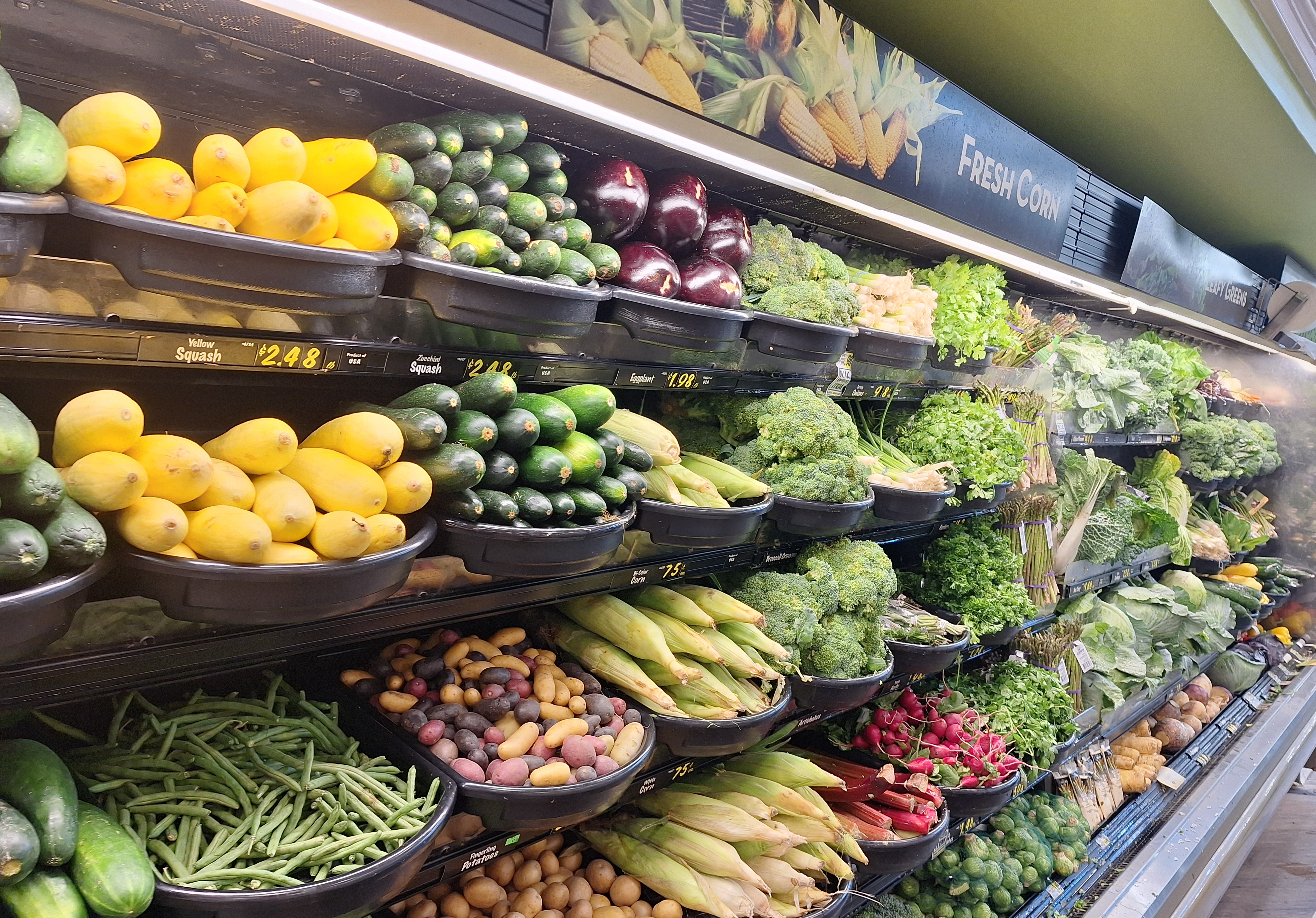
Supply chains are a convenient scapegoat for many of our frustrations when interacting with the food system. When supply chains break down, we all suffer and complain. When these supply chains are working well, no one seems to notice. Everything on our shopping list appears magically on the shelves of our local supermarket as we through the automatic doors. Does our desire to be able to find anything we want lead to oversupply and food waste? Yes, particularly if are talking about fresh produce. Bear in mind, Americans waste more food at home than anywhere else in the food system. Without functioning supply chains, we would see empty shelves at our local supermarkets and be forced to forage for our own food wherever we could find it.
Nature’s Metropolis shows how the supply chain for grain, lumber and freshmeat connected the West with Chicago. Railroads replaced steamboats and wagon trains operating out of St. Louis as the dominant distribution mode of raw materials from the country to the city. As the country developed, primitive supply chains evolved begetting consumer products, mail-order catalogs, and the modern supermarket. But that is another story for my next post.
Coming Soon: How did the supermarket originate? How did it evolve?

 In Defense of Processed Food
3 thoughts on “How did the supply chain originate? How did it evolve? Why do we even need it?”