
More Lessons in [food] chemistry
Chemicals! What a nasty word! What horrors that conjures up in our minds!
Molecules! A much more pleasant connotation!
We certainly don’t want chemicals in our foods! Now molecules, that’s a different story! Particularly those miracle molecules that will improve our health and prolong our lives!
In this blogpost I will focus on chemicals that end up in our food—with particular reference to aspartame, taurine, and methyl eugenol. I will ask a few questions first.
- Are natural chemicals safer than synthetic chemicals?
- Is every ingredient with a chemical name a synthetic chemical?
- Are foods without chemicals better for us than those with them?
Everything we put into our mouths is chemical. We don’t think that we are eating or drinking chemicals every time we sit down for a meal, but we are! Even that metal fork or plastic spoon we use to shovel our food in are made of chemicals. Important chemicals such as proteins, carbohydrates, lipids (fats and oils), dietary fiber, vitamins, and minerals are ones we take for granted. We take in water, oxygen, and carbon dioxide throughout the day and night not thinking about their chemical nature. Problem chemicals include fats, sugar, salt, gluten, caffeine, alcohol, and lactose. All the chemicals listed in this paragraph occur naturally except one—gluten. Gluten is synthesized every time a food manufacturer, chef, or home cook mixes wheat flour and water. They synthesize gluten by reacting the wheat proteins glutenin and gliadin with water and each other to form the man-made chemical gluten!
In the interest of full disclosure, I may be considered a biased source of information with conflicts of interest. I spent 11 years being educated (indoctrinated?) in the field of Food Science and Technology. As an undergraduate and upon graduation I worked on five summer jobs for four different food manufacturers. As a researcher in a Food Science and Technology Department, most of my research funding came from state and federal sources. I did take on some projects funded by industry to support my graduate students. Most of those projects were to answer technical questions facing specific food manufacturers.
Two industry-funded projects involved in the ability of plastic packaging to extend shelf life of fresh vegetables. One of those projects demonstrated the success of perforated bags in delaying spoilage of fresh produce. The company ended up discontinuing production of the bags as consumers didn’t believe that tiny holes in a package could keep vegetables fresh longer. I took on the other project reluctantly as I didn’t believe the bags from another manufacturer would increase shelf life. My results conclusively demonstrated that the bags were ineffective at prolonging freshness of refrigerated vegetables. The company was very upset with me and engaged another scientist to demonstrate the usefulness of their product. The company got a much more acceptable answer from the other scientist.
Recently, I gave a Zoom presentation to a board of scientists at IFIC. My talk was on ultraprocessed foods. It was after I had posted numerous stories on this site in support of ultraprocessed foods. I received an honorarium of $150 for my time and effort. I have NOT received any of my salary from food-industry funds. I do not accept any pay to support this blog, and I buy all the books I review for this site. I just bought 5 books written by food historians from Amazon for over $150.

Aspartame is a molecule that I consume every day, primarily in diet sodas. It is a synthetic compound that combines two amino acids—aspartic acid and phenylalanine. Phenylalanine is an essential amino acid which we get from proteins. Aspartic acid is not essential for humans. Aspartame is sweet unlike either amino acid by itself. It is present in very low amounts. It takes 400 molecules of table sugar (sucrose) to provide the same level of sweetness as 1 molecule of aspartame. When a molecule of aspartame breaks down in the human body, it releases a molecule of methanol, a potent toxin also known as wood alcohol. Strange as it might seem chewing a fresh tomato also releases molecules of methanol in our bodies.
The World Health Organization described aspartame as a potential carcinogen last year. Many articles are online that either defend or condemn the chemical. One of the more balanced articles presents a less sensational view. A technical description of aspartame can be found on Wikipedia. Phenylalanine is toxic to humans with phenylketonuria, an inborn metabolic disorder that requires a highly restrictive diet.

Taurine is also found in proteins. Sometimes described as an amino acid, but a more technical description is as a sulfonic acid. Beware of any article that describes taurine as an amino acid. All meat eaters, like myself get plenty of taurine in our diets. Taurine supplements claim improvement of human longevity. Who could be against anything that could help us live longer? Other health effects are associated with this molecule. Levels of taurine in our bodies diminish over time. Does a deficiency in taurine in our bodies accelerate the aging process? Maybe, but I have my doubts. I am not a big fan of supplements whether I can buy them on Amazon or elsewhere.
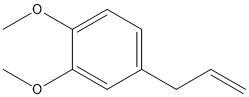
Methyl eugenol, like aspartame, is a chemical I enjoy consuming. Like taurine, there is published evidence for health benefits, specifically as an antioxidant or antibacterial, and in prevention of cardiovascular disease. The chemical is found naturally in many plant and insect species. While I am not yet a consumer of edible insects, I do enjoy methyl eugenol in basil pesto. My favorite way of consuming the chemical is in the green sauce I enjoy on my gluten-free pizza! I don’t consume pesto for its nutritional benefits but for its flavor!

But wait! DANGER ALERT!!! The same warning from the WHO for aspartame as a potential carcinogen also implicates methyl eugenol as a potential carcinogen. Why didn’t we hear about the dangers of pesto when we heard about the dangers of diet soda? Could it be that more people drink diet soda than eat foods with pesto? Or that pesto makers have more economic clout than diet soda companies? Or that headlines condemning diet soda would be more sensational than those about pesto? Or that aspartame is a synthetic chemical and methyl eugenol is a natural molecule? Don’t worry. Methyl eugenol is no longer allowed as an flavor-enhancing additive in packaged food. We can only consume it in manufactured or homemade foods that contain it naturally.
Chemicals that I consume in moderate amounts include caffeine, ethanol, and sucrose. I also avoid products containing gluten and lactose. Caffeine and ethanol are perhaps the most bioactive chemicals most of us consume. Excess sucrose is also not a good idea. That doesn’t mean I abstain from any of these molecules. I tend to be sensitive to caffeine, but it is hard to get a caffeine-free soda when dining out. Caffeine-free, diet soda; decaf coffee; and lactose- free milk are my primary sources of liquid dihydrogen monoxide during the day. Dependency on H2O from the tap would leave me dehydrated on most days. I also like a little caffeine when I am dragging during the day. I am down from my post-hurricane bottle of beer a day to one bottle of beer or a glass of wine a week.
I indulge myself with a couple of chocolate candies or a small bowl of lactose-free ice cream most days not to exceed 14g of sugar at a sitting. I avoid the sugar alcohols which aggravate my IBS. I salute food technologists responsible for gluten-free baked goods and lactose-free dairy products to expand my dietary choices.
Chemicals bad/molecules good is not a useful motto. In the way that they are used in marketing pitches or online articles, chemicals refer to the same substances as molecules. If a marketer wants to proclaim disgust such as “no added chemicals” or an author wishes to condemn a food product that contains “chemicals,” it is a deliberate act of disparagement. Likewise, the euphemistic use of “molecule” such as “magical molecules” in foods or supplements is a deliberate attempt at obfuscation. A more neutral term would be “compound,” but it doesn’t pack the punch of either “chemical” or “molecule.” Ever wonder why they call it “molecular biology” and not “chemical biology?” Scientists can market ideas too!
Rather than illuminating the chemical composition of a food product, ingredient statements on a product label foster a perception that processed foods are complex combinations of numerous chemicals and that whole foods are chemical free. Fruits, vegetables, grains, meat, dairy, fish and homemade dishes containing any of these ingredients are chemically complex foods. Everything we put into our mouths is chemical, or molecular if you prefer. In a sense we are all chemically dependent!
Take home lesson. It’s time to remove the stigma from chemicals and to realize that the only a vacuum is truly chemical free.
Coming soon: How do miracle molecules make it to the mass market?

 In Defense of Processed Food
Finally, a defense of “chemicals” in my diet that I can share when told that my Diet Soda/chocolate anything/mainly other “processed’ food (ie. pre-pared and not ‘fresh”) diet is unhealthy because of the “chemicals” present in them. I’ve often joked that if I cut out the “chemicals” my body doesn’t know what to do.
LikeLike
Thank you Deb! It’s a strange world we live in! Fondly remembering those Wednesdays at Pizza Club followed by Journey. Wishing you the best!
LikeLike