
In the last post, Linn Steward revealed that many of her recipes qualified as hyperpalatable with some even meeting the criteria for both hyperpalatable and ‘healthy’ foods! Who knew that was even possible? If so, what are some of the implications? Before I pursue the topic with respect to homemade foods, I turn my attention to manufactured foods–those
-
- formulated by product developers,
- processed in a commercial manufacturing plant,
- packaged to protect the finished product from contamination,
- tested for quality and safety by laboratory technicians and managers,
- distributed to a supermarket, restaurant, or other retail outlet near you, and
- marketed to let you know that it is available for purchase.
Terms and definitions. To view a topic scientifically, it is important to have a clear understanding of key terms and definitions.
Ultraprocessed foods are “made mostly or entirely made from substances from foods and additives, with little intact unprocessed or minimally processed foods.” They fall into Group 4 by the NOVA classification system.
Hyperpalatable foods are “highly marketed, low-cost, nutrient poor, and calorie-dense products” that cause food addiction [1]. These foods have “specific combinations of fat, sugar, sodium, and carbohydrates–think of potato chips-that make them artificially rewarding to eat and harder to stop consuming.” [2]
Ultraprocessed foods are as much or more about ingredients as they are about actual food processes. Hyperpalatable foods relate to the degree of appeal and satisfaction to those who eat them.
Food addiction is a concept introduced by Gearhardt et al. [1]. It is not recognized as an addiction by the Diagnostic and Statistical Manual of Mental Disorders (DSM-5), the authority on addictive disorders. DSM-5 recognizes gambling, sex, shopping, and video games as behavioral disorders. It does not recognize food addiction as either a behavioral or substance-use disorder.
What is the difference between an ultraprocessed and a hyperpalatable food? It is estimated that about 60% of the food Americans eat is ultra-processed. It is generally agreed that homemade foods are not ultraprocessed. By this logic, more than half of total food Americans eat are ultra-processed products. Hyperpalatable foods entice consumers to eat more than they should eat. Presumably all packaged hyperpalatable foods are also ultraprocessed. Not all ultraprocessed products, however, are hyperpalatable. For example, high-fiber breakfast cereals such as All Bran and Fiber One–Original are hyperpalatable as they don’t have any of the requisite clusters. No gluten-free food strikes me as hyperpalatable, but lactose-free ice cream qualifies. Both of these technological wonders are ultraprocessed. Medical foods to treat certain disease states such as phenylketonuria are ultraprocessed but not necessarily hyperpalatable.
In going through her recipes, Linn Steward found that 35% of them qualify as hyperpalatable. She states that the levels of fat, salt, and sugar in her recipes are lower than those found in industrial formulations used to produce commercial products. Knowing Linn, I am sure that she is very careful not to overdo it. I suspect that most recipes on the internet do not pay as much attention to levels of hyperpalatable ingredients as she does. How many home-prepared meals thus are hyperpalatable? It is clear that frozen entrees, commercial salad dressings, packaged cookies and cakes, ice cream, and all bottled sodas are ultraprocessed and probably hyperpalatable. Homemade brownies are also hyperpalatable. A freshly baked, warmed brownie made from scratch is not ultraprocessed. Is one made from a mix ultraprocessed? Of course it is.
Any commercial product made from an industrial formulation that has at least one additive not considered an approved culinary ingredient is an ultraprocessed food. How many of these unapproved culinary ingredients in a food prepared at home turns a homemade food into an ultraprocessed one? It is not clear. Remember 60% of what we Americans eat are ultraprocessed. Also check purchased sauces and dressings for ultraprocessed ingredients because they could be turning your favorite recipes into ultraprocessed foods. The NOVA classification scheme, the authority on ultraprocessed foods, cautions us to avoid ingredients not typically found in home kitchens. Many of these so-called industrial ingredients, however, can be found on www.amazon.com which means that they are found in some if not many kitchens of cooks who access the website. Breathe easy as sugar and salt are culinary ingredients and don’t count as ultraprocessed ingredients when added to a food prepared at home.
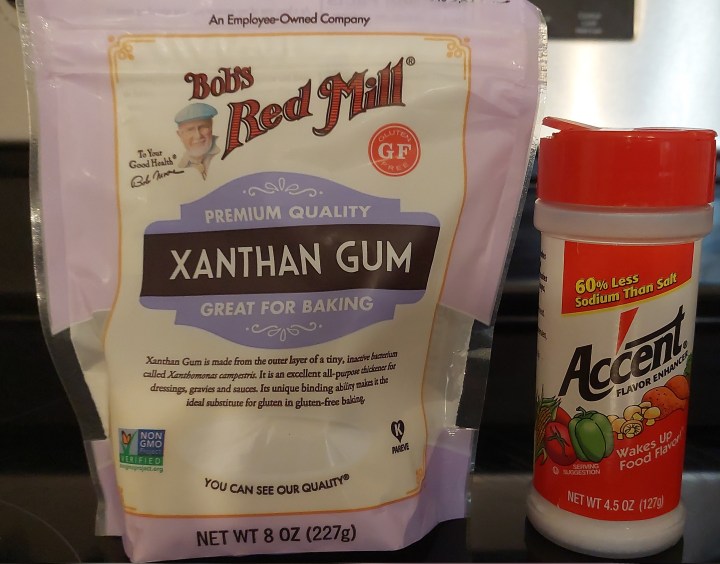
Homemade foods prepared from scratch that use no ultraprocessed ingredients cannot be considered ultraprocessed. How many foods prepared in the home beyond heat-and-eat foods contribute to that 60% of America’s ultra-processed consumption? And how many of those ultraprocessed, home-prepared foods are hyperpalatable? These are questions that are avoided in the condemnation of ultraprocessing and hyperpalatability.
Are hyperpalatable and ultraprocessed foods addictive? Hyperpalatable foods are those that presumably lead to food addiction as described by Gearhardt [1]. Further evidence can be found in the book Processed Food Addiction. The title of chapter 18 in Ultra-Processed People is “UPF is designed to be overconsumed.” The chapter further states that “UPF is addictive, meaning that for some people binges are unavoidable.” Ultra-Processed People doesn’t mention hyperpalatable foods.
Since DSM-5 does not recognize a substance-use food addiction, I think that it is premature to classify anyone as a person with a food addiction. Every other substance-use disorder clearly identifies specific links between the substance causing the disorder and brain chemistry. Each substance classified as addictive to date has been defined chemically. The chemical structures of the hyperpalatable clusters have not been characterized chemically. It is more likely that addictions caused by food are eating addictions, analogous to other behavioral addictions like those associated with gambling, shopping, or video games. It would make sense that hyperpalatable, ultraprocessed products would be more likely to trigger an eating binge than cooked carrots or spinach. We will see if DSM-6 redefines substance use to include the category of hyperpalatable foods or if it identifies an eating addiction as a behavioral disorder.
The discovery that hyperpalatable foods are lurking in Linn’s recipe box elicits further questions. If processed, hyperpalatable foods are really addictive, could homemade, hyperpalatable foods also be addictive? If so, are the desserts we fix at home setting our children up for a possible food addiction later in life? Or are only manufactured, hyperpalatable foods addictive with homemade from scratch getting a pass? How does the brain sort out these differences?
Can either hyperpalatable or ultraprocessed foods be considered healthy? Linn Steward found that some of her recipes qualify as both hyperpalatable and healthy. Linn and I agree that defining “healthy” varies on who is defining it. Developing algorithms to categorize healthiness of specific foods takes out the human element. The problem is that computers don’t eat foods, humans do. Linn deviates from adhering to a strict nutritional classification of a food as her background as a cook has her focus on “taste.” She fears that new definitions of “healthy” get to the point of suppressing palatability. We both agree that food is meant to please the palate as well as to convey health benefits. Where each of us draws that line is where we differ.
Take home lesson. The more we try to define and categorize food, the more complex it becomes. We can try to package foods into little boxes like addictive, healthy, hyperpalatable, or ultraprocessed, but the criteria to differentiate them become obscure. Even distinguishing the boxes between homemade and commercial are not as clear as they appear at first glance.
Coming soon: Lessons in [food] Chemistry
References:
[1] Gearhardt, A.N., C. Davis, R. Kuschner, and K.D. Brownell, 2011. The addiction potential of hyperpalatable foods. Current Drug Abuse Reviews 4(3): 140-145. https://DOI:10.2174/18744737111104030140
{2] Fazzino, T.L., K. Rohde, and D.K. Sullivan, 2019. Hyper-palatable foods: Development of a quantitative definition and application to the US Food System Database. Obesity 27:1761-1768 https://doi.org/10.1002/oby.22639

 In Defense of Processed Food
I was holding my breath sorting out the differences and the nuance between hyperpalatable, ultra processed, healthy, NOVA, food safe etc. When I read the “take home lesson”, I exhaled.
Looking forward to lessons in food chemistry!
LikeLike
Thank you Karen. So great to hear from you! I am glad that I did not disappoint you. Looking forward to your reaction to lessons in food chemistry.
LikeLike
Money. Cooks have time to do all this. Mothers of preschoolers may be stuck at home. Us very old may have more time and cook to use lower-cost market purchases, but so many others eat fast, driven by taste and time, not as much by processing.
LikeLike