
In many debates there is a deep valley between the perspectives of the participants. Each side uses different avenues to get to their truth and refuses to listen to proponents on the other side. In some debates the space between the two sides is so deep and wide that neither side accepts the other’s positions, premises, propositions, or proofs. One such debate is the one on healthy foods. Charlotte Biltekoff has taken on this issue in her brilliant book Real Food, Real Facts: Processed Food and the Politics of Knowledge.
Linn Steward and I have discussed this topic on my blog and in the friendly confines of an ultraprocessed food debate. At times our views have been conciliatory and at other times we assume adversarial positions. When caught in the middle of the debate we seem to descend into the depths of the Valley of the Shadow of Death. Biltekoff has framed the debate as between activists (Real Food) and scientists (Real Facts). Linn fits into the former camp, and you can find me in the latter camp.
The thesis of the book is the way two distinct groups differ sharply in the way they view food and its distribution system in America. One side argues that regulators and the food industry have relied on scientific expertise to develop a safe, nutritious, food supply as well as to provide convenience in food preparation, minimize food waste, and appeal to our palate. The other side claims that regulators, Big Food, and scientists collaborate to provide a system that markets an unhealthy food supply contributing to a growing chronic disease outbreak in the country and around the world. Rather than reach a compromise solution, both sides proclaim the righteousness of their cause and the evil nature of their opponents. Biltekoff describes how to view the food supply though two Frames: Real Food and Real Facts.
The Real Food Frame represents a complex web of understanding of how food is handled, processed, and distributed in a complex system that is hard to appreciate, comprehend, or embrace. This web has expanded strand by strand with each strand interconnected to other strands in the web. For example, key strands in the web include:
- reframing of nutrition from consumption of good nutrients like protein, vitamins, and minerals to avoidance of bad nutrients like fat, salt, and sugar;
- change a perception of food risk from controlling harmful food microbes in natural foods to the dangers of pesticides and chemical additives in processed foods;
- a shift in concern from risks from communicable diseases to contribution of formulated foods in the development of chronic diseases such as diabetes, heart disease, and obesity;
- whole=good/refined=bad, food culture=good/food science=bad and other binary choices;
- alternative food movement declaring Real Food to be healthy and processed food to be unhealthy;
- a growing belief that Big Food had usurped the credibility of Science to the point that such proclamations were no longer valid;
- emergence of scary technologies such as artificial ingredients, genetic engineering, and industrial formulation;
- NOVA coins the term ultraprocessed foods which are energy dense, hyperpalatable, and over-marketed contributors to chronic disease and, thus not Real Foods;
- rapid communication of dangers of food and the food system through food journalists and information readily available on the internet.
This web represents an intertwined series of beliefs bound together by concerns of sustainability, industrialization and corporate control, as well as health and risk. Its activists tend to come from a Liberal Arts background and think holistically, not reductively like those from a Basic Science background. Key architects and proponents of this point of view include Wendell Berry, Jean Dye Gussow, Norah MacKendrick, Carlos Monteiro, Marion Nestle, Michael Pollan, Eric Schlosser, and Gyorgy Scrinis.
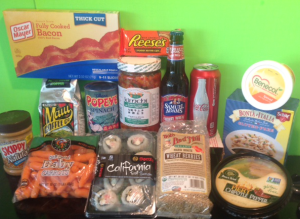
Real Food or Not Real Food?
The Real Facts Frame either missed or ignored these trends that have devloped over the last few decades. Its defenders are academicians from the basic sciences like chemistry, microbiology, and toxicology, or applied sciences like nutrition, entomology, or food science. These professors, mostly male, were used to being listened to and not to being questioned. Quite frankly, most advocates of Real Facts did not perceive the threat as the advantages of safety, health, and convenience offered by modern food products are far superior to those available to previous generations. The Real Facts should be obvious to anyone with a brain and its advocates are unaware of any potential threat and become shocked to face questions about modern food products.
Among the battlefields defenders of Real Facts took on included:
- fact checking of the Food Babe by the Sci Babe;
- a defense of processed and formulated foods as a part of a wholesome diet;
- pointing out the errors and misinformation in such films as Food Inc., Fast Food Nation, and a host of other cinematic features that promoted the Real Food talking points; and
- describing a linear supply chain from farm to supermarket that did not address directly concerns and values of the Real Food Frame;
Realizing that reacting to Real Food propaganda was not enough, Real Facts went on offense with a positive campaign featuring a banana poster descrying chemophobia of Real Food campaigns listing numerous food ‘ingredients’ found in a ripe banana.
Real Food meets Real Facts in the school classroom.
To educate children in the classroom
- Real Food targeted young, active citizens;
- Real Food prepared a Discussion Guide for discussing Food Inc. to advance their philosophical perspective;
- teachers were provided printed guidelines to promote Real Food’s political position by prompting students with questions for farmers, supermarket management and other parts of the distribution chain;
- Real Facts presented an alternative to Real Food through the Alliance to Feed the Future prepared by the International Food Information Council (IFIC) which assumed that the Real-Food Discussion Guide unitentionally provided misinformation about processed food through a misunderstanding, and that IFIC could set the record straight;
- IFIC targeted “willing consumers” creating a series of educational materials that provided teacher materials for sessions on understanding the modern food system complete with activity levels and food ingredient cards featuring functions of added ingredients including color additives, emulsifiers, and fat replacers;
- Real Facts began to realize that Real Food was using the school system to assault conventional agricultural production and the food industry asking who else could counter Real Food; as
- both Real Food and Real Facts designed their course materials to fit within the Common Core standards for classroom instruction.
The now open warfare between Real Food and Real Facts proceeded to other fights over the meaning of natural and food transparency. For more details on these topics, I encourage you to buy and read the book. The information presented is worth assimilating for those on either side of the Valley or anyone confused about the food we eat and has not chosen sides. The genius of the Real Food Frame is that no single strand is essential to its maintenance, but any appeal to “Science” is suspect. It is not a matter of searching for the weakest link in the Real Food Frame. Not any Real Foodie is bound to all its premises, as each supporter can pick and choose those items that matter most to them personally and ignore other strands. The weapons a Real Factician relies on are science-based evidence, refereed journal articles, proclamations by experts in a designated area: none-of-which mean anything in the Real Food Frame. Likewise, appeals to movements for social justice, economic inequity, and other causes seem irrelevant in the Real Facts Frame when judging the healthiness of individual foods.
Yet, the Real Food Frame is generally accepted by a majority of Americans, even though a majority of the population contines to buy and consume ultraprocessed foods. Many of the believers in the Real Food Philosophy tend to eat these forbidden foods with a guilty conscience, but eat them just the same.

Real Food or Not Real Food?
Charlie Arnot developed the Center for Food Integrity to help bridge the gap between Real Foods and Real Facts. He considered and addressed the values of Real Food, but his solutions and explanations tended to fit more into the Real Facts Frame. He did identify a group as “The Moveable Middle” that might be reached with the CFI approach but finding avenues to connect has been difficult. More scientists who value the importance of Real Evidence need to rethink their strategies when engaging with activists about Real Food.
To convince those on the other side of the Valley in any dispute to consider changing their minds, Adam Grant offers in Think Again: The Power of Knowing What You Don’t Know the following suggestions:
- Find some common ground with the other side and acknowledge that perspective,
- Reduce your case to a few of your best points as weak reasons tend to dilute your position,
- Ask more open-ended questions while making fewer declarative statements,
- Listen carefully to better understand the alternate point of view,
- Affirm the other person’s desire and ability to change, and
- Do not force them to change sides, but let them think about what you say, and support the choice they make.
Real Food has found its advocate in the leadership of Health and Human Services and its included agencies. How far this Department will go to implement Real Food wishes and desires is yet to be seen. Real Facts is playing from behind and will need to better understand the values behind the Real Food Frame to make an impact. It will also be interesting to see how much the American population will continue to believe in Real Food if and when their favorite ultraprocessed products start disappearing from their favorite supermarkets and restaurants
Take-home lesson: Engaging in Real Discussion on this and other controversial topics could help us learn what we don’t really know. Attempting to communicate with the Moveable Middle could provide a way to moderate our positions. Maybe we can even find some Real Solutions in the Valley located between the sacred mountains of Real Food and Real Facts!

 In Defense of Processed Food