
Elizabeth Zott is a chemist at the prestigious Hastings Institute in 1961 in this summer’s bestselling novel Lessons in Chemistry by Bonnie Garmus. Like many professional women in the 50s and 60s, Elizabeth faces discrimination, sexual assault, and other challenges. After being fired from her job, she is hired by a local television station to do a cooking show. The book traces her trials and triumphs. It is well written and has much to say to us today. I recommend it here because of the Lessons she provides in Chemistry with particular reference to food. Elizabeth, like me, believes that cooking is all about chemistry. Here are some of her gems:
“into the starch, lipid, and protein molecule configuration you rolled out earlier—your piecrust—the one whose chemical bonds were enabled using the water molecule, H2O, and through which you created the perfect marriage of stability and structure.” She describes how the properties of these chemicals when they interact to provide our desired outcomes. Each ingredient—flour, sugar, salt, butter, water, and shortening has a specific function. The flour provides both the starch and the protein. The sugar helps to tenderize the crust as well as to improve its flavor. Salt also adds flavor. Butter and shortening provide the lipid (chemical term for fat or oil) for structure. The butter contributes flavor. The shortening improves the tenderness and flakiness of the crust. The ice water turns the mixed ingredients into a ball of dough suitable for rolling. Keeping the fat cold is critical to the success of the recipe.
In [food] chemistry we call these factors the functional properties of the ingredients. Each functional property ties back to the chemical and physical properties of the chemical components of that ingredient. It is no wonder that Elizabeth appreciates the chemical intricacies of food and cooking. Desirable flavor is what every cook seeks to achieve. Food that is recognized for “tasting good” is perhaps the greatest reward a cook can reap. More subtle, however, are the textural properties of a food. The tenderness and flakiness of a crust whether for a blueberry pie or a chicken pot pie adds to the eater’s satisfaction.
During my career I was particularly intrigued by the interplay between chemistry, cooking, and food. As a food scientist my two specialties were in food chemistry/biochemistry and postharvest physiology of fresh fruits and vegetables. Among the eight courses I developed and taught were Food Chemistry and Flavor Chemistry and Evaluation. Much of what Elizabeth teaches on her cooking show Supper at Six resonates with what I taught in my classes. Offered in bold are some of her Lessons in [food] Chemistry.
“specifically focusing on the difference between ‘bound water’ and ‘free water’ because this may surprise you, meat is about seventy-two percent water.” Water is a critical component of any food. H2O is the chemical we consume the most and one that contributes to our overall satisfaction. Moist or dry? Tough or tender? Smooth or crumbly? Watery or viscous? Creamy or separated? Frozen or thawed? Water plays a role in all of these differences and many more. The way that water interacts with other ingredients can make the difference between a successful dish and disaster. Even dry foods have water, most of it ‘bound.’ Interaction of the water within foods not only affects satisfaction, it also contributes to food safety. Drying and freezing help preserve foods by removing the availability of water to microbes. Most fruits and vegetables are made up of 90% or more water. Only solid fats and vegetable oils contain no water.
The second chapter in the textbook I used for my course in Food Chemistry covered 70 pages on the physical chemistry of water as it relates to food. I jumped from the first chapter to the last one because my students did not have the technical background to absorb the complex nature of water relations in food. The last chapters focused on the chemistry of specific types of foods: from plants, animals, and milk. Then the class worked its way forward to various chemical and biochemical aspects of food substances. By the time we made it back to Chapter 2, the class had enough background to appreciate the importance of the structure and function of water as it interacted with other food chemicals. To understand the chemistry of food, we must appreciate that foods from plants and animals are much more chemically complex than most processed foods.
“one of my patients refused to push until you finished explaining the Maillard reaction” stated Elizabeth’s physician who was talking about a recent birth. Maillard browning contributes to the appearance of cooked foods. The free amines in proteins during cooking interact with reducing sugars to form brown colors we know and love. Think toast, chocolate, pie crusts, caramel, seared steak, and many more. But the goodness doesn’t stop there. The Maillard reaction also contributes to flavor development. The difference between the flavor of raw food and cooked food results from the conversion of simple flavor molecules to more complex ones as the chemicals within and between ingredients interact to form unique structures with unique flavors. The Maillard reaction is only one of many such chemical processes that produce desired flavors we enjoy at mealtime. The art of cooking is to produce foods that stimulate the senses and please the palate through complex chemical interactions.
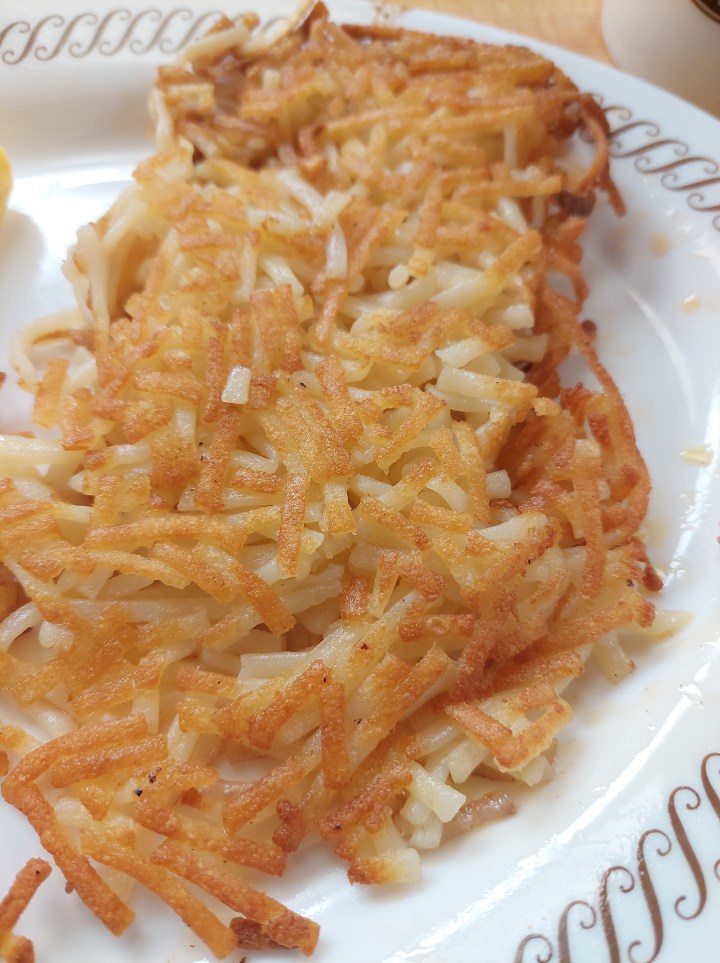
“She set a plate of cookies in front of him. ‘They’re cinnamaldehyde’ she explained.” Speaking of Maillard browning, we see it again in Elizabeth’s cookies. That pale coloration of the raw cookie dough turns a beautiful golden brown when baked compliments of Maillard browning. As to the cinnamaldehyde, it is the chemical in cinnamon that contributes to its alluring aroma. Cinnamon comes from the bark of cassia trees typically found in China. The rich-brown bark is ground into the aromatic spice we find appealing. The aroma of cinnamon is more nuanced than cinnamaldehyde as other chemical components including eugenol round out its aromatic profile. Spices and aromatic fruits contain numerous chemicals contributing to its aroma profile. Most spices and fruits have a character-impact compound that provides a strong indication of the aroma. Character-impact compounds in spices include allicin in garlic and curcumin in turmeric. Vanillin is the key aromatic component of vanilla extract. Nootkatone is the key to grapefruit flavor; iso-amyl acetate in bananas; and benzaldehyde found in cherries and almonds.
Cinnamon is known for its health properties, but its use won’t make Elizabeth’s cookies healthy. Garlic and turmeric, also touted for their health properties, won’t improve our health either when added to home-cooked dishes, but they contribute to the palatability of our meals. Supplements containing cinnamaldehyde, allicin, turmeric, or other aromatic compounds are available for self-medication on amazon.com, but I caution buyer beware. Magic potions containing purified chemicals are not necessarily keys to a long life and good health.
“Eggplant is highly nutritious, but it can be bitter due to its phenolic compounds.” Elizabeth was having a bad day and decided to abandon her eggplant recipe and fix brownies instead. Home cooks may be torn between cooking something healthy and something enticing. There are recipes that can be both, but brownies represent comfort food and eggplant does not. Many vegetables have bitter compounds which is a reason why many children find them unappealing. Sugar, fat, and salt enhance palatability but may lead to undesirable health consequences when over-consumed. One problem is that satisfaction is immediate, while health outcomes result from long-term dietary patterns. Drawing sharp lines between tasty and disgusting or between healthy and toxic obscures the need for balance between palatability and nutritional benefit. The challenge is designing those recipes containing health-promoting ingredients for most meals while leaving room for special treats.
“It’s a real time-saver. That’s because it’s full of artificial ingredients. Feed enough of it to your loved ones, and they’ll eventually die off,” she said about the can of soup she was supposed to feature as a sponsor of the show. She then proceeds to throw the can in the trash. Now this is one of the few places I beg to differ with Elizabeth. Granted, she only cooks with fresh ingredients. I have no problem with that, but must she slam processed products the way that she does? The show’s producer wanted Elizabeth to add the contents of the can of soup into a casserole. That implies that he was talking about Cream of Mushroom Soup. Such casseroles were staples of my mother’s cooking in the late 50s and early 60s. We still celebrate green bean casserole as an iconic Thanksgiving dish.
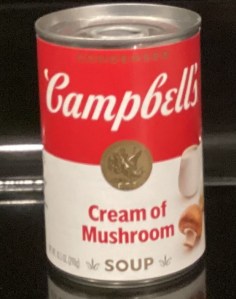
Where I challenge Elizabeth Zott is her declaration of artificial ingredients in soup. The current ingredient statement for Campbell’s Cream of Mushroom Soup is
WATER, VEGETABLE OIL (CORN, CANOLA, AND/OR SOYBEAN), MUSHROOMS, MODIFIED FOOD STARCH, WHEAT FLOUR, CONTAINS LESS THAN 2% OF: SALT, CREAM (MILK), SOY PROTEIN CONCENTRATE, YEAST EXTRACT, WHEY*, GARLIC*, FLAVORING. *DRIED CONTAINS: WHEAT, MILK, SOY
I suspect the ingredients haven’t changed that much from the 60s. Campbell’s probably just used corn oil back then, and I doubt the ingredients included soy protein concentrate. The only ‘artificial’ ingredient I see is modified food starch. It is a stretch to suggest that modified food starch is killing off the families of cooks watching Supper at Six. If there was concern about artificial ingredients, there are much better food targets than a can of soup! The rest of the book portrays Elizabeth as a much better chemist than that.
Take home lessons include:
- Every ingredient on a label or in a recipe happens for a reason. It’s called a functional property.
- Water is the most widely consumed chemical present in food, and its interaction with other ingredients affects appearance, flavor, and texture of foods.
- The Maillard reaction is a complex chemical process that adds color and flavor to an otherwise ordinary meal.
- Components of foods from plants and animals are chemicals with hard-to-pronounce names that never appear on a label of a whole food or spice.
- Healthy, whole foods may contain chemicals that make them unappealing to many eaters, especially those of a young age.
- Most components of processed foods that show up on the label are NOT artificial, and even approved artificial ingredients won’t kill us.
Let’s realize that food is more than just fuel to keep our bodies going. There are cultural, social, hedonic, and other influences that affect our food choices as well as our physical and mental health. Let’s not forget that everything we put into our mouths is chemical. It is better to understand the chemical nature of our foods than to either demonize or glorify individual molecules.
Coming soon: More Lessons in [food] Chemistry: Aspartame, Taurine, and Methyl Eugenol

 In Defense of Processed Food
3 thoughts on “Lessons in [food] Chemistry”